Tired of Killing Your Plants? This Smart Garden Saved My Friendships
We’ve all been there—promising to water a friend’s plant while they’re away, only to return it half-dead. I did it twice. Then came the smart garden: sensors, gentle reminders, even a shared app. No more guilty texts. No more brown leaves. Just thriving greenery and stronger connections. Turns out, caring for a plant together can keep friendships alive too. It wasn’t just about saving a fiddle leaf fig from dehydration—it was about honoring a promise, showing up, and doing it without the stress. And honestly? That little plant became a quiet teacher in how small acts of care, supported by smart tools, can deepen the bonds we value most.
The Guilty Truth About Plant Sitting
I’ll never forget the look on my friend Maya’s face when she returned from her two-week vacation to find her prized monstera drooping like a sad umbrella, its leaves curled and crispy at the edges. I had promised—swore on my favorite coffee mug—that I would water it every four days. But life happened. A sick kid, a work deadline, two back-to-back PTA meetings. By the time I remembered, it was too late. I showed up with a sad bouquet of grocery-store flowers and a mumbled apology. “It’s okay,” she said, but I could see the disappointment. It wasn’t really about the plant. It was about trust. That plant wasn’t just greenery—it was a living thing she’d nurtured for years, moved across apartments with, even named (yes, really—she called it Marvin). Asking me to care for it was her way of saying, “I trust you with something I love.” And I’d let her down over something that felt so small, yet meant so much.
Later, over tea, Maya admitted she’d been burned before. Her cousin had “just forgotten” to water a peace lily she’d been gifted after her mom passed. That plant was more than decoration—it was a memory, a comfort. When it died, it felt like losing a piece of that connection all over again. I realized then that plant sitting isn’t a chore. It’s emotional labor. It’s a quiet exchange of care that says, “I see what matters to you, and I’ll protect it while you’re gone.” But here’s the truth: we’re all juggling so much. Remembering to water a plant when you’re managing school pickups, work emails, and your own mental load? It’s easy to slip. And every time we do, a tiny crack forms in the trust we’ve built. What if there was a way to honor that trust without adding more to our plates?
When Technology Steps In—Without Taking Over
A few months after the monstera incident, I stumbled on a smart plant sensor at a home goods store. It looked like a sleek metal spike you stick into the soil. I almost walked past it—just another gadget, right? But the woman next to me picked one up and said, “This thing saved my sister’s orchid—and our relationship.” I had to know more. She explained how the sensor tracks moisture, light, and temperature, then sends alerts to your phone. “No more guessing. No more guilt,” she said with a grin. Something clicked. This wasn’t about replacing care. It was about supporting it.
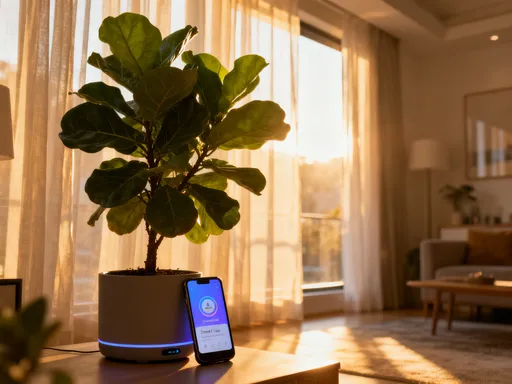
I bought one, tested it on my own sad spider plant (which had seen better days), and was amazed. The app showed me exactly when the soil was dry—not too early, not too late. It even gave care tips based on the plant’s needs. But the real breakthrough came when I thought: what if Maya and I used one together? I reached out, half-joking, “What if Marvin could text us when he’s thirsty?” To my surprise, she loved the idea. We got a smart planter system with a built-in sensor and a shared app. The first time I got a notification—“Soil moisture low. Time to water?”—I smiled. It wasn’t a nag. It was a nudge, like a friend whispering, “Hey, don’t forget.” And for the first time, I didn’t feel overwhelmed. I felt supported.
Technology often gets a bad rap for pulling us away from real connection. But this was different. It wasn’t replacing our attention—it was enhancing it. Think of it like a grocery list app you share with your partner. You’re still the one buying the milk, but the app makes sure it gets done. The care is still yours. The intention is still heartfelt. The tool just removes the friction. That’s the beauty of well-designed tech: it doesn’t take over. It lifts you up.
How a Simple Sensor Strengthened Our Bond
The real magic started with the first alert. Maya was in Portland for a work conference. I got a ping on my phone: “Your fiddle leaf fig needs water.” I walked over, checked the soil (yep, dry), gave it a good drink, snapped a photo, and sent it through the app with a note: “Your fig says thanks. Also, I may have sung it a lullaby. No judgment.” Maya replied within minutes: “You’re a lifesaver. Marvin sends hugs.” We both laughed. It was silly. It was sweet. And it felt like we were in this together.
Over time, these little moments became rituals. I started looking forward to the alerts. They weren’t chores—they were check-ins. A reminder that someone I cared about had entrusted me with something meaningful. And every time I responded, I wasn’t just watering a plant. I was saying, “I’m here. I’ve got this.” Maya told me it eased her anxiety about leaving town. “Before, I’d worry the whole trip,” she admitted. “Now, I know Marvin’s in good hands—and I get little updates that feel like love notes.”
One weekend, the app notified us both that the light levels were low. Instead of panicking, we FaceTimed while I moved the plant to a sunnier spot. We joked about Marvin’s “vitamin D deficiency” and made a plan to rotate him weekly. It wasn’t just plant care anymore. It was shared parenting. And in those moments, across miles and screens, we felt closer than ever. The sensor didn’t create our friendship—but it gave us a new language for showing up in it.
Beyond Watering: Shared Care as Emotional Glue
What surprised me most was how much joy we found in the small wins. When Marvin sprouted a new leaf—big, waxy, and perfectly unfurled—we celebrated like new parents. I sent a photo with confetti emojis. Maya called it “our leaf.” We even took turns naming the new growth (hers was “Hope,” mine was “Resilience”—we compromised on “Hoperence”). It sounds silly, but it mattered. Because in a world that often feels heavy, these tiny victories became anchors. They reminded us that care, consistency, and attention can make something thrive—even when it’s not human.
But it went deeper than that. Caring for Marvin together tapped into something we both craved: the feeling of being needed in a low-pressure, meaningful way. As mothers, professionals, friends, we’re often “on” all the time. We give so much. But this was different. This was care that didn’t drain us—it filled us. Because it was visible. It was rewarded. We could see the results of our effort in greener leaves and stronger stems. And that visibility made all the difference. It wasn’t abstract. It was tangible proof that our attention mattered.
When Marvin developed a few yellowing leaves, we didn’t blame each other. We troubleshooted. The app suggested overwatering. We adjusted. We researched together. We even consulted a local nursery (old school, I know). But the point wasn’t fixing the problem—it was doing it side by side. That’s the power of shared responsibility. It turns stress into solidarity. It turns guilt into growth—both for the plant and for the relationship. We weren’t just keeping a plant alive. We were practicing how to care for each other, one small act at a time.
Tech That Feels Human, Not Cold
I know what you’re thinking. Isn’t technology supposed to make us more distant? More distracted? I used to believe that too. I thought smart gadgets were for people who wanted to outsource life. But this experience changed my mind. The right tech doesn’t remove humanity—it amplifies it. It’s like having a thoughtful friend who remembers the details so you don’t have to. It’s not cold. It’s considerate.
Think about it: we use shared calendars to coordinate family dinners. We use group chats to plan birthdays. We rely on weather apps to decide if the kids need raincoats. None of that makes us care less. It helps us care better. A smart plant system is no different. It’s a tool for intention, not a replacement for it. It’s designed to reduce the mental load so you can focus on the emotional payoff. And when it’s shared between friends, it becomes a rhythm of care—a quiet, steady beat that says, “I’m here. I remember. I care.”
The best technologies aren’t the ones that do everything for you. They’re the ones that help you be your best self. This one helped me be a better friend. It didn’t water the plant for me. I still had to walk over, pour the water, feel the soil. But it made sure I didn’t forget. It turned a moment of potential failure into an opportunity for connection. And that’s the kind of tech I can get behind—one that doesn’t isolate, but includes. One that doesn’t automate emotion, but enables it.
Simple Steps to Start Caring—Together
If you’re curious, starting is easier than you think. You don’t need a full smart garden or a PhD in botany. Begin small. Pick one plant—maybe a pothos or a snake plant, something forgiving. Get a basic soil moisture sensor. They’re affordable, easy to install (just stick it in the dirt), and most come with free apps. I started with a $25 sensor from a well-known home brand. No wires, no complicated setup. Within minutes, it was tracking and sending alerts.
Then, invite a friend into the app. Most let you share access with a few taps. Choose someone you trust—or someone you want to grow closer to. Maybe it’s your sister, your best friend from college, or your neighbor who always waves from her porch. Send the invite with a message like, “Want to co-parent a plant? No diapers, just occasional watering.” Make it fun. Set up custom notifications—“Thirsty much?” or “I could use a drink before your next Zoom call.” Add emojis. Keep it light.
Create a tiny tradition around it. Maybe every Sunday, you send a plant selfie with a quick update. “Marvin’s looking fly today” or “Your aloe is glowing—must be the new window spot.” Or pair it with a coffee date—virtual or in person. The goal isn’t perfection. It’s presence. It’s creating a small, shared ritual that says, “I’m thinking of you.” And if the plant thrives? Bonus. But even if it doesn’t, the act of trying together is what counts.
Growing More Than Plants—Growing Trust
It’s been over a year since Maya and I started caring for Marvin together. He’s taller now, fuller, with leaves that catch the light like green stained glass. But more than that, our friendship feels stronger. We check in more often. Not just about the plant—but about life. How her daughter’s doing in school. How I’m managing my new freelance gig. The plant became a bridge. A reason to connect. A shared project that reminded us we’re not alone in the daily grind.
We’ve missed things, of course. Life still happens. But the difference is, we don’t spiral. If one of us forgets, the sensor catches it. No blame. No guilt. Just a gentle reminder and a quick fix. And over time, that’s built trust—not just in the tech, but in each other. We know we can rely on the system, and more importantly, we know we can rely on one another. The small, consistent acts of care have added up to something bigger: a deeper sense of connection, resilience, and mutual support.
In a world that often feels disconnected, where friendships can fade under the weight of busy lives, this simple practice has taught us how to stay close. It’s not about grand gestures. It’s about showing up in the small ways. It’s about saying, “I see what matters to you, and I’ll help protect it.” And sometimes, that care just needs a little help to succeed. We didn’t just save a plant. We learned how to show up for each other—without burning out. And if a $25 sensor can do that? I’d say it’s one of the best investments in friendship I’ve ever made.