Painted 37 Family Dinners Together Online: How a Simple App Turned Meals into Friendship Moments
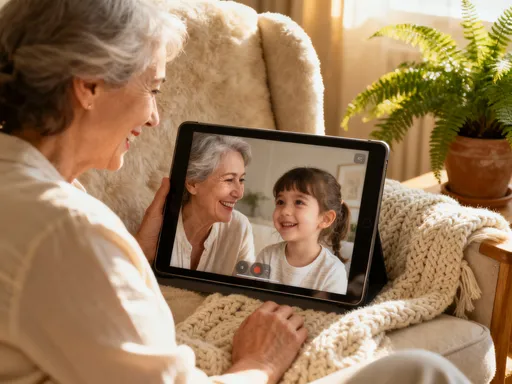
Remember those quiet dinners where everyone’s on their phone? We were too—until we tried an online painting platform during dinner one night. What started as a silly idea became a ritual. Now, laughter fills our table as we paint together, even when we’re miles apart. It’s not just about art—it’s about connection. This little tech habit transformed our family time into something joyful, creative, and surprisingly meaningful. No fancy tools, no pressure to be Picasso—just shared colors, messy brushes, and real conversations blooming over takeout boxes. If you’ve ever felt like your family is sitting together but emotionally miles apart, this might be the gentle nudge you need.
The Dinner Table That Lost Its Spark
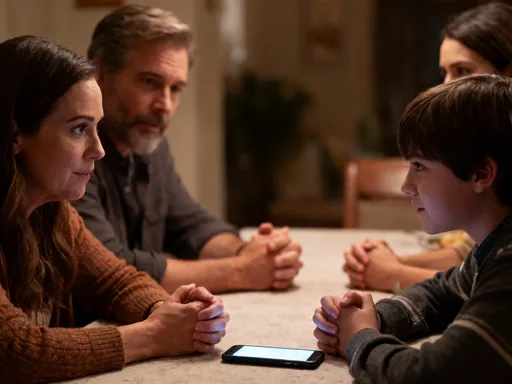
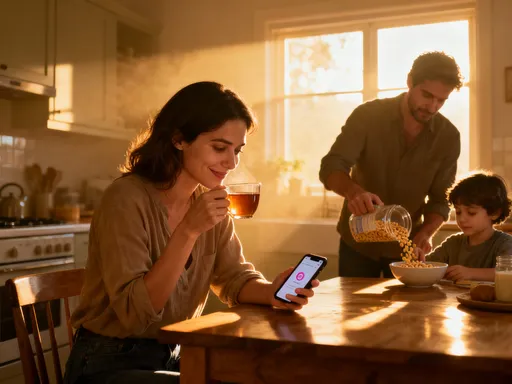
Not long ago, our dinner table looked like so many others: plates cooling, voices silent, faces lit by the glow of screens. My daughter scrolled through school updates, my husband checked work emails, and I caught up on news—each of us physically present but mentally elsewhere. We’d ask, “How was your day?” but the answers were short, automatic, like filling out a form. “Fine.” “Busy.” “Same as yesterday.” And then, silence again. It wasn’t that we didn’t care. We loved each other deeply. But something had changed. The rhythm of connection had slowed, replaced by the convenience of digital distraction.
I remember one evening, I looked up and realized no one had spoken in nearly ten minutes. The only sound was the faint tapping of thumbs on glass. That moment hit me like a quiet storm. We were living in the same house, sharing the same meals, but we were drifting. Not in a dramatic way—no fights, no breakdowns—but in a slow, subtle fade. And I knew we weren’t alone. So many of us are living this way: surrounded by family, yet feeling disconnected. We’re busy, tired, and overwhelmed, and the easiest thing becomes doing nothing—just letting the silence grow.
It made me wonder: when did dinner stop being a moment to connect? When did it become just another task to get through? I missed the stories, the laughter, the unexpected moments when someone would say something that made us all pause and really listen. I didn’t want to force deep conversations or turn meals into therapy sessions. I just wanted us to be present. To be together. And then, by chance, I found a way—not through words, but through paint.
A Random Experiment with Color and Canvas
It started with a friend’s offhand comment. She said, “We did this fun thing last night—painted together online while eating dinner. You should try it!” I almost laughed. Painting? Me? I hadn’t touched a paintbrush since third grade, and even then, my tree looked like a green blob with sticks. But something about the idea stuck with me. It wasn’t about art. It was about doing something silly, together, without pressure.
So one Friday, I set it up. I picked a beginner-friendly platform—nothing fancy, just a shared digital canvas where everyone could paint at the same time from their own devices. I didn’t announce it like a big event. I just said, “Hey, let’s try something different tonight. We’ll eat, and while we do, we’ll all paint the same thing—maybe a sunset or a cat or something easy. No judging, no winning. Just messing around.”
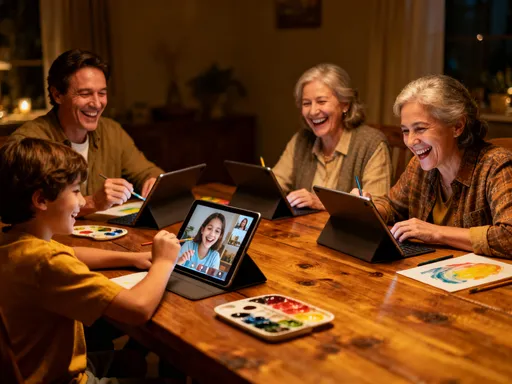
The first night was a mess. My son drew a “sunset” that looked like a traffic accident of orange and red. My daughter’s cat had three eyes and a lopsided tail. I tried to paint a mountain and ended up with a brown smear. But the room? It was alive. We were laughing. Really laughing. Not the polite chuckle at a TV show, but deep, belly laughs at how bad we all were. And in that laughter, something shifted. The screen barrier broke. We weren’t performing anymore. We were just being.
That night, we didn’t talk about school or work or schedules. We talked about why my mountain looked like a potato, why the cat looked possessed, and whether the sunset could be interpreted as a fire drill. But it didn’t matter. What mattered was that we were talking. And listening. And enjoying being together. That one awkward, colorful experiment became something we looked forward to. Not every night—just once a week at first. But it was enough to remind us what dinner could feel like again.
How Painting Together Opens Up Conversation
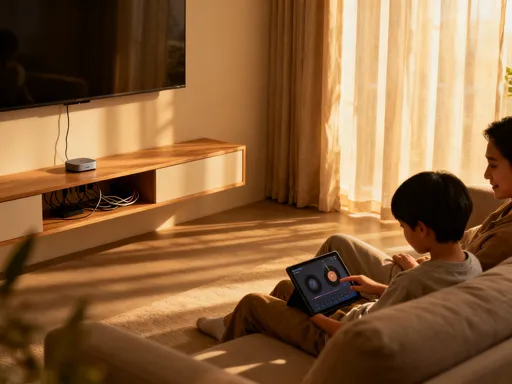
Here’s something I didn’t expect: we started talking more when we weren’t looking at each other. When we paint side by side—each on our own device, following the same tutorial or theme—there’s no pressure to make eye contact or perform. It’s like the act of creating together lowers the emotional walls. You’re focused on the screen, but your mind relaxes. And in that space, real things start to come out.
One night, my teenage daughter, who usually gives one-word answers at dinner, said out of nowhere, “I’ve been really stressed about college apps.” We weren’t talking to each other—we were painting a forest scene, adding trees and little animals. But because the focus wasn’t on her, she felt safe to speak. I didn’t turn and stare. I just kept painting and said, “That sounds heavy. Want to tell me more?” And she did. Not everything, not all at once, but more than she had in weeks. That moment didn’t happen because I asked the right question. It happened because we were doing something low-stakes and creative together.
Psychologists call this “parallel play”—the idea that people, especially teens and adults who feel social pressure, open up more when they’re engaged in a shared activity rather than face-to-face conversation. It’s why some people talk best on a walk, in the car, or while doing dishes. The activity becomes a container for connection. Painting, in this case, gave us that container. It wasn’t about the art. It was about the shared rhythm, the mutual focus, the sense that we were building something together—even if it was just a silly digital forest with neon-green trees.
Over time, I noticed other shifts. My husband started sharing little stories from his day—not the big stuff, but the small moments: a kind barista, a funny email, a meeting that ran long. My son began asking us questions: “What did you dream about last night?” “If you could live anywhere, where would it be?” These weren’t deep interviews. They were gentle, curious exchanges that wouldn’t have happened in a more formal setting. But in the soft glow of our painting screens, they flowed naturally. The brushstrokes on the canvas mirrored the brushstrokes of conversation—uneven, imperfect, but real.
More Than Family: Meeting New People Over Shared Strokes
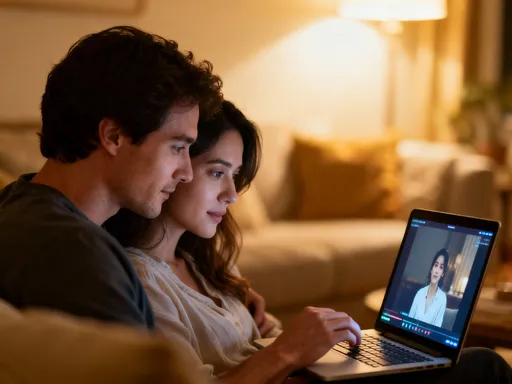
After a few weeks of family painting nights, I got curious. Could this work with others? I found a live group session on the same platform—a guided painting event happening in real time with people from all over. It was scheduled for 6:30 PM, perfect for dinner. I invited my family to join me, but this time, we wouldn’t be alone. We’d be painting with strangers.
I wasn’t sure how it would go. Would it feel awkward? Would we be judged? But from the first minute, it felt surprisingly warm. The host was cheerful, the instructions simple, and the chat box lit up with greetings: “Hi from Texas!” “Painting with my mom in Florida!” “First time—wish me luck!” We weren’t just following a tutorial. We were part of a moment. A shared experience.
What amazed me was how quickly a sense of community formed. People weren’t showing off perfect paintings. They were celebrating the messy ones. Someone posted, “My sky looks like a bruise, but I love it!” Another said, “I gave up on the tree and made a spaceship instead.” And we all laughed together, typing little hearts and clapping emojis. It felt joyful. Human.
One evening, a woman from Canada shared that she was painting alone but loved feeling connected. “My kids are grown and far away,” she wrote. “This feels like coming home.” I remember reading that and feeling a lump in my throat. This wasn’t just a fun activity. It was filling a quiet need so many of us have—to belong, to be seen, to share a moment with others, even if only through pixels on a screen.
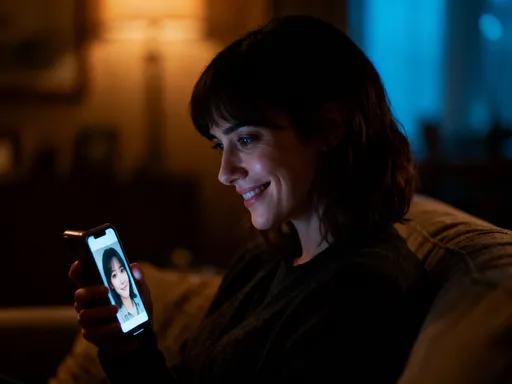
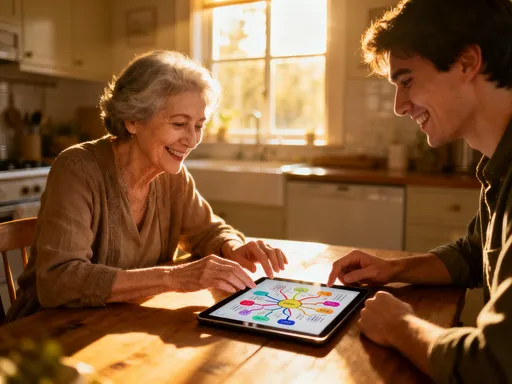
We started joining these group dinners once a month. Sometimes we’d paint with people from different countries, different time zones, different lives. But the theme was always the same: create together, laugh at the mistakes, and enjoy the moment. My daughter even made a “painting friend” from Oregon—someone she now messages before sessions, sharing what snacks she’s eating or what color she’s excited to use. It’s not a deep friendship, but it’s real. It’s connection. And in a world that often feels divided, that matters.
The Magic of Doing Something “Useless” Together
We spend so much of our lives optimizing—maximizing productivity, minimizing waste, measuring success. Dinner should be efficient. Time should be well spent. But here’s the thing: painting together is gloriously useless. No one is getting promoted because of it. No grades are improved. No chores are checked off. And yet, it might be one of the most valuable things we do.
There’s something healing about doing something just because it feels good. No outcome. No pressure. Just the joy of making a mess with people you love. I’ve watched my family’s shoulders relax during these sessions. The constant hum of stress—the deadlines, the worries, the mental to-do lists—seems to quiet down. For an hour, we’re not fixing anything. We’re just being.
Psychologists talk about “flow state”—that feeling of being fully immersed in an activity, losing track of time, feeling both calm and energized. Painting, even badly, can bring that. It engages the hands, the eyes, the imagination. It’s meditative in a way that scrolling never is. And because we’re doing it together, it becomes a shared ritual—a small act of rebellion against the idea that every moment must be productive.
I’ve also noticed how it brings back a childlike sense of wonder. My son once spent ten minutes trying to mix the perfect shade of purple. “It’s not red enough,” he’d say, adding a drop of crimson. “Now it’s too dark.” He wasn’t trying to win a prize. He was just curious. And that curiosity is something we often lose as adults. We stop experimenting. We stop playing. We forget how to be silly. But painting together reminds us. It says: it’s okay to not know. It’s okay to fail. It’s okay to laugh at your three-eyed cat.
And in that space, something tender grows. Not just creativity, but closeness. Not just color on a screen, but warmth in the room. We’re not just painting pictures. We’re painting memories. And those, unlike the digital canvases we save, stay with us long after the devices are turned off.
Making It Work in Real Life: No Talent or Time Needed
I know what you might be thinking: “This sounds nice, but I don’t have time.” Or, “I can’t draw a stick figure.” I felt the same way. But here’s the truth: this isn’t about talent. It’s about showing up. And it doesn’t have to be every night. Start small. Once a week. Even once a month.
Pick a platform that’s easy to use—look for ones with live guided sessions, simple tools, and the ability to join from a phone, tablet, or computer. Many are free or low-cost. Set a regular time—Friday dinners work well for us, but Sunday nights or even a weekday can work. Call it “Paint & Eat Night” or “Color Time” or whatever feels fun to your family. The name matters less than the habit.
Keep the food simple. This isn’t about gourmet meals. Order pizza. Heat up soup. Make sandwiches. The goal is to reduce pressure, not add to it. Let everyone eat with one hand and paint with the other. Use beginner prompts: a beach, a starry sky, a silly animal. Or let someone pick a theme—“something that makes you happy” or “your dream vacation.”
If someone resists, don’t push. Just say, “You don’t have to paint. Just sit with us. Watch if you want.” Often, just being in the space is enough. And who knows? They might pick up a brush by the end.
The key is consistency, not perfection. Some nights will be loud and joyful. Others might feel quiet or awkward. That’s okay. The point isn’t to create masterpieces. It’s to create moments. To be together. To remember each other’s voices, laughter, and presence. And over time, those moments add up. They become the fabric of your family’s story.
From One Dinner to a New Way of Connecting
It’s been 37 dinners since we started. Some were with just our family. Others included friends, neighbors, even my sister’s family from across the country. We’ve painted rainbows, oceans, dragons, and one very questionable attempt at a pineapple. The paintings? Most are forgotten. But the feelings? Those stay.
This simple tech habit didn’t just change our dinners. It changed how we relate. We’re more patient. More present. More willing to share the small, quiet things that matter. We’ve learned that connection doesn’t always come from big talks or planned events. Sometimes, it comes from doing something simple, slightly silly, and completely together.
Technology often gets blamed for pulling us apart. And yes, it can. But it can also bring us closer—if we use it with intention. This app didn’t create our bond. We already loved each other. But it gave us a new way to express it. A shared language of color and laughter. A ritual that says: you matter. I’m here. Let’s make something, even if it’s just a mess.
So if your dinner table feels a little quiet, a little distant, I invite you to try it. Just once. Pick a night. Open an app. Paint something ridiculous. Don’t worry about the outcome. Just show up. And see what happens. You might be surprised by who shows up—not just at the table, but in your heart. Because sometimes, the most meaningful connections begin not with a deep conversation, but with a shared brushstroke, a laugh, and the quiet magic of being together, even when you’re apart.