From Chaos to Calm: How Smart Spaces Gave My Home Its Peace Back
You know that feeling—coming home after a long day, ready to relax, only to be greeted by tangled wires, remote control chaos, and the never-ending search for the right streaming login? I’ve been there. My living room felt more like a tech battlefield than a place to unwind. But everything changed when I stopped fighting my gadgets and started organizing them—intentionally, calmly, with real purpose.
It wasn’t about buying more smart devices. It was about making the ones I already had work for me, not against me. What began as a simple desire to declutter turned into a total home transformation—one that brought peace, ease, and even more quality time with my family. This is how I turned my chaotic entertainment space into a smart, serene sanctuary.
The Mess Behind the Magic: When Smart Homes Feel Anything But Smart
Let’s be honest—smart homes were supposed to make life easier. But somewhere along the way, mine started feeling more complicated than ever. I remember one Friday night vividly. My husband was holding three different remotes, trying to figure out which one turned on the soundbar. My daughter was yelling, “Is the Wi-Fi broken?” because her tablet wouldn’t connect to the TV. And I was scrolling through five different apps trying to find the right password for our streaming service. We just wanted to watch a movie. Instead, we spent 20 minutes in tech limbo.
Sound familiar? I started realizing this wasn’t just a one-time mess. Our living room had become a tangle of cables, mismatched devices, and forgotten updates. We had a smart TV, a streaming box, a gaming console, a sound system, and two tablets all meant to work together—but they didn’t. Each device had its own app, its own login, its own quirks. And the worst part? The space that was supposed to bring us together—our family’s relaxation zone—was actually creating friction.
That’s when it hit me: just because something is labeled “smart” doesn’t mean it’s working smartly for your life. The promise of convenience was being drowned out by the noise of disorganization. I wasn’t alone, either. A friend confessed she keeps her old DVD player because she can’t figure out how to cast from her phone. Another said her kids avoid using the TV altogether because the menu is “too confusing.” We weren’t failing at technology—technology was failing us.
The emotional toll surprised me the most. That sense of frustration, the raised voices, the “I just want to relax!” moments—they weren’t about the remote. They were about feeling out of control in our own home. And if your sanctuary feels like a puzzle you can’t solve, it’s time to step back and ask: Who’s really in charge here—me, or my gadgets?
Seeing the Space Differently: Treating Tech Like Furniture
The turning point came when I stopped seeing my devices as separate tech projects and started thinking of them as part of the home’s design—like a sofa, a coffee table, or a bookshelf. I asked myself: What purpose does each device serve? Where does it belong? How does it fit into our daily rhythm? This simple shift changed everything.
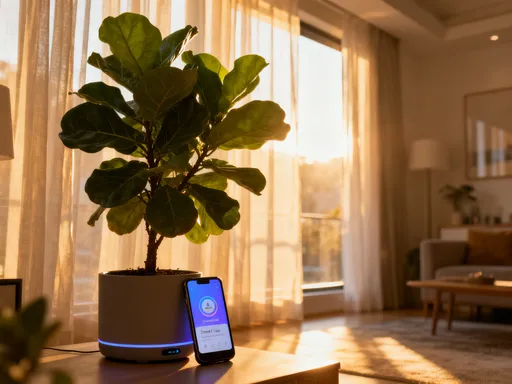
For example, I realized our smart speaker wasn’t just for playing music—it could be the voice of our home. So instead of leaving it on a shelf in the corner, I gave it a central spot on the console table, where everyone could see and use it. I named it “Living Room Helper” instead of some random code like “Device_34X.” Suddenly, my kids could say, “Hey, ask Living Room Helper to play bedtime stories,” and it just worked.
Same with the TV setup. I looked at the entertainment center like I would a piece of furniture: what goes where, what stays visible, what gets tucked away. I asked, “Who uses this most? What do they need most often?” My answer: my 10-year-old and my mom when she visits. So I made sure the main functions—power, volume, and favorite shows—were easy to access. I created a “Family Mode” on the streaming app with just five kid-friendly options. No scrolling. No confusion. Just tap and play.
This mindset also helped me let go of things we didn’t actually use. That second streaming box we bought “just in case”? Gone. The old gaming console from five years ago? Donated. I treated the space like I would a closet purge—keeping only what served a clear purpose. And just like organizing a closet, the result wasn’t just cleaner—it was calmer. When everything has a place and a reason, the room starts to breathe again.
One Hub to Rule Them All: Simplifying Control Without Sacrificing Power
If you’ve ever switched between four apps to play a movie, you know how exhausting tech control can be. I was ready for a simpler way. That’s when I discovered the power of a single hub—a central system that could manage all our entertainment devices from one place. And no, you don’t need to be a tech genius to set this up.
I chose a smart display with a touch screen and voice control. It connects to our TV, soundbar, streaming devices, and even the lights. Now, instead of hunting for remotes, I can just say, “Hey, start movie night,” and the TV turns on, the lights dim, and our favorite streaming app launches automatically. My husband uses the touch screen to browse shows, and my daughter loves asking it to play her favorite songs. It’s like having a helpful assistant who actually listens.
Setting it up took about an hour. I followed the app’s guided setup, linked each device, and created a few simple commands. The key was keeping it user-friendly. I didn’t overload it with complex automations. Instead, I focused on the routines we actually use: “Movie Night,” “Good Morning Music,” and “Bedtime Quiet.” Now, anyone in the house can use it—even my tech-wary mother-in-law, who once called me in panic because she couldn’t figure out how to mute the TV.
The biggest win? Decision fatigue dropped dramatically. No more arguing over which app to use or who gets to pick the show. We have a shared playlist, a family profile, and a single interface that works for all of us. It’s not about having the fanciest gear—it’s about having a system that feels natural, like turning on a lamp. When control becomes effortless, the space becomes peaceful.
Hiding the Tech, Keeping the Magic: Invisible Organization That Works
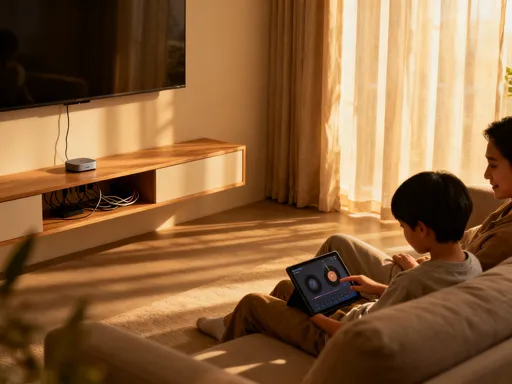
Let’s talk about the wires. Oh, the wires. They were everywhere—under the TV stand, behind the sofa, even snaking across the floor. Every time I vacuumed, I worried I’d unplug something important. And let’s be real: a room full of cords doesn’t exactly scream “serene retreat.” So I decided to make the tech invisible—but still fully functional.
I started with cable management. I bought a simple fabric cable sleeve—black, so it blends in—and bundled all the cords together. No more tangles. Then I used adhesive clips to route them neatly along the back of the TV stand and down to the power strip. I labeled each plug with a small tag: “TV,” “Soundbar,” “Streaming Box.” Now, if something goes wrong, I don’t have to guess. I can unplug the right one without disrupting everything else.
Next, I looked at device consolidation. We had three streaming sticks plugged in, but we only used one regularly. I unplugged the extras and stored them in a labeled drawer organizer—“Backup Tech”—just in case. The main devices I placed inside a closed media cabinet with ventilation slots. It keeps dust out, hides the clutter, and makes the space look intentional. The cabinet has soft-close doors, so there’s no slamming, and the remote signals still work through the wood.
For the smart display, I found a small floating shelf above the console and mounted it there. It’s at eye level, easy to interact with, but doesn’t take up table space. And because it’s the only visible tech piece, it actually feels like part of the decor. The goal wasn’t to eliminate technology—it was to let it serve us quietly, without demanding attention. When the magic happens behind the scenes, the peace stays front and center.
Routines That Work for Real Life: Automation That Feels Human
I used to think automation was for people who love complicated tech setups. Then I realized it could be as simple as, “When I say ‘Goodnight,’ the TV turns off and the lights go down.” That’s when automation stopped feeling robotic and started feeling like care.
I created a few gentle routines that match our daily rhythm. Every evening at 7:30, the living room lights automatically shift to a warmer tone. It’s not a hard rule—just a soft signal that it’s time to wind down. On weekends, when we have family game night, I set a routine called “Game Time.” With one tap, the TV switches to the console, the soundbar turns on, and the playlist of upbeat music starts. My kids cheer when they hear the first note.
Another favorite? “Morning Light.” Between 7:00 and 7:15, the lights in the living room slowly brighten, mimicking sunrise. It’s not blaring music or a harsh alarm—just a gentle nudge that the day is beginning. I love how it makes waking up feel kinder, especially on dark winter mornings. My husband even said, “I didn’t know a light could feel comforting.”
The key to making automation work is to keep it simple and meaningful. I didn’t set up 20 different triggers. I focused on moments that matter—transition times, family rituals, and quiet pauses. These small acts of care add up. They don’t replace human connection; they make space for it. When your home helps you transition smoothly from one moment to the next, you’re less stressed, more present, and more available to the people you love.
Sharing Without the Struggle: Making Tech Work for Everyone
A smart home shouldn’t be a solo project. If only one person knows how it works, it’s not really a family system—it’s a burden. I wanted everyone to feel confident using our tech, not intimidated by it. So I focused on sharing access in a way that felt safe, simple, and inclusive.
I set up individual user profiles on our streaming service and smart display. My daughter has her own login with age-appropriate content and a custom wallpaper she picked out. My husband has his favorite sports channels front and center. And I created a “Guest Mode” for visitors—simple, limited access that doesn’t expose our passwords or personal data. Even my mom, who still calls her phone a “mobile,” can now start a video call with one tap. “It’s like magic,” she said the first time she did it.
I also paid attention to interface design. I rearranged the home screen of the smart display so the most-used functions were at the top: “Call Family,” “Play Music,” “Watch Shows.” I used big icons and clear labels. No technical jargon. No nested menus. And I made sure voice commands were reliable—so if someone can’t read the screen, they can still participate.
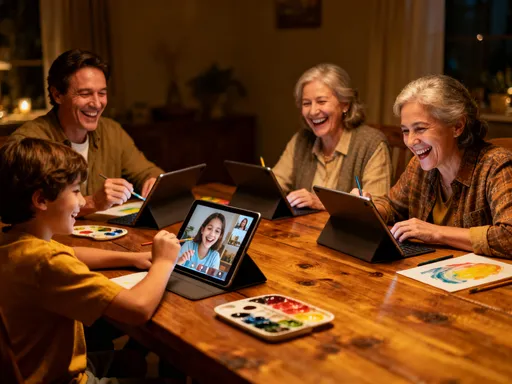
The real test came during a weekend visit from my sister and her kids. Without me lifting a finger, my 7-year-old nephew used the voice assistant to play a cartoon, my sister dimmed the lights for nap time, and my mom joined a family video call from her chair. I sat back and watched, amazed. This wasn’t just about convenience—it was about connection. When technology removes barriers, it brings people closer. And that, to me, is the whole point.
The Calm After the Storm: What Peace Feels Like in a Smart Home
Now, when I walk into the living room, I feel it immediately: calm. No more remote wars. No more “Why won’t it work?” moments. No more tech-induced stress. Instead, I hear laughter, see faces lit by the warm glow of the TV, and feel the ease of a space that supports us instead of fights us.
The changes weren’t just physical—they were emotional. We argue less. We relax more. We actually use the space we created. Movie nights are fun again. Game nights happen without setup drama. And quiet evenings with a book or a cup of tea feel truly restful, because the room itself feels settled.
I’ve also noticed something unexpected: more presence. Because I’m not troubleshooting, I’m actually with my family. I’m listening to my daughter’s stories, watching my husband’s reactions to the show, sharing quiet smiles with my mom. The time we spend together feels richer, deeper, more meaningful. And that’s the gift I didn’t know I was giving myself when I started this journey.
Organizing our smart entertainment space wasn’t about control. It wasn’t about having the latest gadgets. It was about creating room—for peace, for connection, for joy. It was about making our home work for us, so we could stop managing devices and start living.
If you’re standing in your own tech chaos, wondering where to start, I’ll tell you what helped me: begin small. Pick one pain point. Tame the wires. Choose one routine. Invite one person to try the new system. Progress, not perfection. Because peace isn’t found in a flawless setup—it’s found in the moments when you realize, I’m not fighting my home anymore. I’m finally at home.