Mapped 8 senior family chats in 2 weeks: The app that finally made connections clear
Ever feel like talking to your aging parents turns into a maze of repeated names, lost thoughts, and missed moments? I did—until I found a simple tool that changed everything. No more confusion, no more frustration. Just clearer conversations, shared memories, and real connection. This isn’t about tech for tech’s sake. It’s about staying close when it matters most. Let me show you how one small change made a big difference in my family. It wasn’t a medical breakthrough or a fancy gadget. It was a quiet, colorful way of seeing her world—not fixing it, but finally understanding it.
The Quiet Struggle in Everyday Conversations
It started with small things. My mom would pause on the phone, mid-sentence, and say, “You know, the one who brings the potato salad to church?” She’d wait for me to fill in the blank. I’d scramble—was it Carol? Linda? Jean? Sometimes I’d guess right. Often I wouldn’t. And then she’d sigh, “Oh, never mind,” and move on. Those moments used to sting. Not because I didn’t care, but because I couldn’t help. I’d hang up feeling guilty, like I’d failed her somehow. We’d always been close—she was the one I called when the oven broke, when the kids were sick, when I needed to laugh. But now, our calls felt more like interviews than conversations. I’d ask, “How was your week?” and she’d tell me about a doctor’s appointment, but forget to say why she went. Or she’d mention a friend’s fall but not remember her name. I wasn’t just missing details—I was missing her.
And I know I’m not alone. So many of us are walking this path—talking to parents who are still very much *there*, but whose thoughts don’t always travel in straight lines anymore. It’s not dementia, not necessarily. It’s just… life. Age changes how we process, store, and retrieve memories. Conversations become patchy. We lose threads. We repeat ourselves. And the people who love us? We try to keep up, but we get tired. We start dreading the calls. We start filling in gaps, guessing names, changing the subject. We think we’re helping, but really, we’re just covering up the cracks. I didn’t want to cover anything up. I wanted to connect. I wanted to listen—and be heard back. But I needed a new way to talk.
Discovering Mind Mapping as a Conversation Companion
I first came across mind mapping years ago, back when I was managing team projects at work. You start with a central idea—say, “Q3 Marketing Plan”—and then you branch out: social media, email campaigns, events. Each branch splits into smaller ones. It’s visual, flexible, and surprisingly intuitive. I loved how it helped me see connections I’d missed in a list. But I never thought it could help with family—until one rainy Tuesday, when I was trying to make sense of my mom’s latest call.
She’d mentioned her neighbor’s dog, then her blood pressure meds, then a dream about her sister, then the new grocery store clerk who reminds her of her cousin Edna. I was trying to take notes, but the ideas were all over the page. On a whim, I opened a blank document and typed “Mom” in the center. Then I added bubbles: “Dog (Buddy, barks at mailman),” “Medication (morning pill, forgets sometimes),” “Sister Ruth (passed, but dreams about her),” “Clerk (glasses, kind, looks like Edna).” I connected them loosely—not with rigid lines, but with soft curves, like thoughts drifting in the air. When I showed it to my mom the next time we video-called, she leaned in. “Oh,” she said, touching the screen with her fingertip. “That’s how my head feels.”
That moment changed everything. It wasn’t about fixing her memory. It was about validating her way of thinking. Her mind doesn’t work in straight lines—it works in webs. One thought tugs another, and another, like a spider’s silk catching dew. The mind map didn’t fight that. It celebrated it. And for the first time in a long time, she didn’t feel broken. She felt understood.
Why This Works Where Other Tools Failed
We’d tried other things before. A notebook by the phone—she’d write down names, but lose the page. A voice recorder app—she forgot to turn it on, or felt like she was being monitored. A medication tracker—too rigid, too cold. Even a family group chat—too many people, too much noise. Each tool felt like it was treating a symptom, not supporting her whole self. They demanded order. They assumed a linear mind. And when she couldn’t meet those expectations, she gave up. So did I.
But mind mapping? It’s different. It doesn’t care if you start in the middle, jump to the edge, or circle back. It welcomes tangents. It rewards curiosity. It’s not about getting it right—it’s about getting it *out*. And because it’s visual, it bypasses the frustration of searching for words. When she can’t recall a name, she’ll point to a bubble and say, “The one with the red hat, at the park,” and I’ll find it—“Martha! You walked her dog last week.” It’s not a test. It’s a treasure hunt. And every time we find a match, we smile.
Plus, the brain loves visuals. Research shows that we remember images better than text, and that spatial organization helps with recall. Mind mapping taps into that naturally. It’s not a medical device, but it works with how our minds actually function—especially as we age. It’s like giving her thoughts a playground instead of a prison.
How We Started: A Simple First Step
I didn’t introduce it as a “solution.” That would’ve felt heavy. Instead, I said, “Hey, want to try something fun? Let’s just draw how your week went.” We were having tea at her kitchen table, her hands wrapped around her favorite mug. I pulled out my tablet and opened a free mind mapping app—nothing complicated, just a clean interface with drag-and-drop bubbles and color options. I tapped the center and wrote “This Week.” Then I looked at her. “What’s the first thing that comes to mind?”
She thought for a second. “I walked with Jean.” I added a bubble: “Walk with Jean.” Then I asked, “What happened on the walk?” She smiled. “The brown dog barked.” Another bubble. “And Jean said she might get a new puppy.” Another. “And we saw that little blue bird—the one that builds nests in the eaves.” More bubbles. She watched, fascinated, as the map grew. Then she said, “Can I try?” I handed her the tablet. She tapped, dragged, changed the color of Jean’s bubble to purple—“Because that’s her favorite.”
That was the moment it stopped being my tool and became *ours*. She wasn’t passive. She was creating. She was in control. And for someone who often feels like the world is moving too fast, that sense of agency is everything. We didn’t do it perfectly. We misspelled names. We made bubbles too small. But it didn’t matter. What mattered was that we were building something—together.
Building Bridges, Not Just Notes
The real magic didn’t show up in better memory. It showed up in better connection. One day, she was trying to remember who won the church raffle. “It starts with a G,” she said, frowning. I pulled up the map from last week’s visit. We scrolled through the “Church Bingo” branch. There it was—“Gloria, blue hat, loves crossword puzzles.” “Yes!” she said, clapping her hands. “Gloria! She gave me a chocolate bar.” That wasn’t just recall. That was joy. It was victory. It was dignity.
And for me? It eased the quiet fear I’d been carrying—the fear that one day, I’d call and she wouldn’t know my name. That fear hasn’t vanished, but it’s smaller now. Because I’ve learned that memory isn’t the only way to be close. Presence is. Attention is. And when we map together, I’m not just listening—I’m *seeing* her. I’m following her trail, not expecting her to walk mine. The map doesn’t replace conversation. It deepens it. It gives us a shared language—one that doesn’t judge gaps, but fills them with kindness.
It’s also helped me understand her world in ways I never could before. I see patterns—she mentions her sister Ruth more when it rains. She talks about food when she’s lonely. The dog at the park makes her smile every time. These aren’t just data points. They’re emotional clues. And now, I can respond with more empathy. When she brings up Ruth, I don’t change the subject. I say, “Tell me about her.” And she does. And we remember together.
Making It a Daily Ritual, Not a Chore
We’ve turned it into a little ritual—ten minutes after lunch, every day we talk. Sometimes it’s a video call. Sometimes it’s a quick voice note she leaves, and I map it later. I call it “morning mapping,” even though it’s in the afternoon. It’s not about tracking her like a project. It’s about tuning in. It’s my way of saying, “I’m here. I see you. I care.”
The app syncs across devices, so I can review the map before our next call. I don’t quiz her. I don’t say, “Last time you mentioned Martha—how’s her dog?” That would feel like an exam. Instead, I say, “You know, I was thinking about that blue bird you saw. Did you ever spot the nest?” It’s not about testing memory. It’s about continuing the story. And when she adds a new bubble—“Found a robin’s egg under the azalea!”—I feel it in my chest. That’s not information. That’s wonder. That’s life.
And here’s the unexpected gift: it’s helped me, too. I’m more patient. I interrupt less. I listen more deeply. I’ve started using mind maps for my own life—planning meals, organizing school events, even sorting through feelings. It’s become a way of thinking, not just a tool. But with my mom, it’s more than that. It’s love made visible.
A Tool That Grows with You
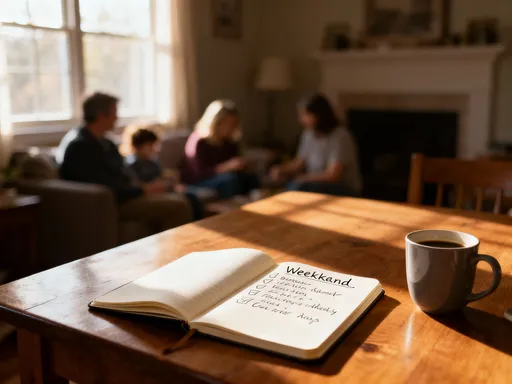
Two weeks in, I mapped eight conversations. Eight moments that, without the tool, might have slipped through the cracks. But now? They’re preserved. Not perfectly. Not neatly. But truly. And what started as a way to reduce confusion has become a way to deepen love. It’s not a cure. It’s a companion. Some days, she’s not in the mood. “Too tired,” she’ll say. And I say, “That’s okay. We’ll try tomorrow.” No pressure. No guilt. Just space.
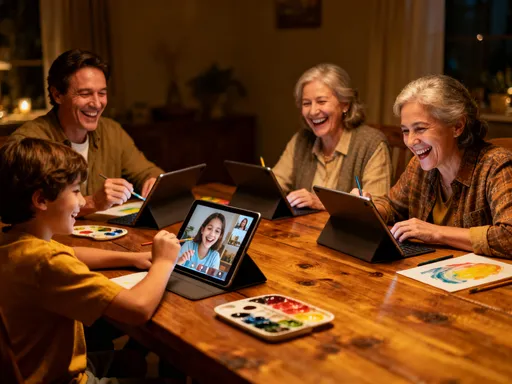
But on the good days—oh, the good days. She drags bubbles around like puzzle pieces. She names them with little nicknames—“Mr. Grumpy” for the neighbor’s cat, “Sunshine” for the morning light in her kitchen. She laughs. She remembers. She feels capable. And I see her—not as someone losing her mind, but as someone still very much living in it, with humor, with heart, with curiosity.
More than anything, this little app has taught me that connection isn’t about remembering every name or date. It’s about being willing to meet someone where they are. It’s about saying, “I’ll follow your path, even if it winds.” It’s about creating a space where confusion isn’t failure, but a starting point. And sometimes, all it takes is a few colored bubbles to make someone feel truly seen, truly heard, truly loved. If you’re walking this path with someone you care about, I hope you’ll try it. Not for perfection. But for presence. Because in the end, that’s what matters most.