How I Survived the Commercial Property Trap—And What I Learned About Risk
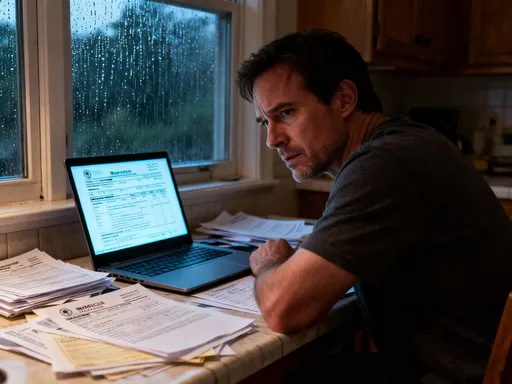
Investing in commercial real estate seemed like a fast track to wealth—until I almost lost everything. What started as a promising deal turned into a costly lesson in risk management. This is not a success story; it’s a real talk about blind spots, hidden liabilities, and the strategies that finally kept me afloat. If you're chasing yields without seeing the dangers, this one’s for you. Behind every high-return promise lies a network of overlooked risks—tenant instability, shifting neighborhoods, and unexpected maintenance costs that can turn a profitable asset into a financial burden. This experience reshaped how I view investing, not as a gamble, but as a disciplined practice of preparation, awareness, and long-term thinking.
The Allure of Commercial Property: Why Everyone’s Jumping In
Commercial real estate has long held a magnetic appeal for investors seeking income beyond the stock market’s volatility. Unlike residential rentals, which often come with month-to-month uncertainty, commercial leases typically span five to ten years, sometimes longer. These extended agreements suggest stability, predictable cash flow, and a steady path toward wealth accumulation. Add in the perception that businesses are more reliable tenants than individuals, and it’s easy to see why so many are drawn to office spaces, retail units, and industrial warehouses as investment vehicles.
Brokers and advertisements amplify this appeal with polished renderings, projected returns, and compelling case studies. An investor might see a property advertised with an 8% cap rate and assume it’s a safe bet, especially when compared to the 2–3% yields of traditional savings or bonds. But beneath the surface, the reality is far more complex. High yields often come with high risks—risks that aren’t always clearly disclosed. The commercial market doesn’t operate like the residential one, where demand is relatively constant due to human need for shelter. Instead, commercial demand is tied directly to economic health, business confidence, and consumer behavior—all of which can shift rapidly.
What many new investors fail to grasp is that a strong rental income on paper doesn’t guarantee long-term profitability. A tenant may vacate due to restructuring, bankruptcy, or relocation. A retail space in a bustling shopping district today could lose foot traffic tomorrow if a new highway reroutes commuter patterns. Moreover, commercial leases often place the burden of maintenance, taxes, and insurance on the landlord, especially in gross lease structures, which can erode margins unexpectedly. The psychological draw of passive income can cloud judgment, leading investors to overlook operational demands and long-term liabilities.
The surge in commercial property interest is also fueled by low interest rates and limited alternatives. With bonds yielding little and stock markets feeling unpredictable, real estate appears as a tangible, income-generating asset. Yet this popularity can create a false sense of security. Just because many people are investing doesn’t mean the market is foolproof. In fact, herd behavior often precedes market corrections. The key is not to follow the crowd but to understand the mechanics behind the returns—and to recognize that every investment carries trade-offs between risk and reward.
My First Deal Gone Wrong: A Wake-Up Call
My journey into commercial real estate began with confidence. I had done my research, studied market trends, and consulted with a seasoned broker. The property was an unassuming two-story office building in a mid-sized city, occupied by a national insurance firm under a seven-year lease. The cap rate was 7.8%, well above the local average, and the tenant had a solid credit rating. To me, it looked like a low-risk, high-reward opportunity—the kind of deal investors dream about. I secured financing with a 25% down payment and closed the purchase with optimism.
For the first 18 months, everything went smoothly. Rent payments arrived on time, maintenance costs were minimal, and the property appreciated slightly in value. I began to believe I had mastered the game. But then, without warning, the tenant announced a corporate downsizing. They planned to consolidate regional offices and would be vacating the space in six months. Suddenly, my reliable income stream was in jeopardy. I assumed I could re-lease the space quickly, but the local market was already saturated with vacant office units. The demand simply wasn’t there.
Vacancy dragged on for over a year. During that time, I continued to pay the mortgage, property taxes, insurance, and basic upkeep—all without any rental income. My cash reserves began to dwindle. When I approached my lender about refinancing to buy time, they declined, citing the lack of tenant history and declining occupancy rates in the area. I was trapped. To make matters worse, the building needed a new roof and HVAC upgrades, costs I hadn’t budgeted for. I eventually found a tenant, but at a 30% lower rent, and with a shorter lease term. The property no longer cash-flowed as expected.
This experience was a humbling wake-up call. I had focused so much on the numbers—the cap rate, the tenant’s creditworthiness, the lease length—that I ignored broader risks. I assumed stability based on a single contract, failing to account for economic shifts, market saturation, and the fragility of business operations. My mistake wasn’t in buying the property; it was in not preparing for what could go wrong. Risk assessment wasn’t part of my process. I had mistaken optimism for strategy, and it nearly cost me everything.
Risk #1: Tenant Concentration—Putting All Eggs in One Basket
One of the most critical lessons I learned was the danger of tenant concentration. My office building relied entirely on one tenant for 100% of its income. When that tenant left, the financial impact was immediate and severe. This is a common pitfall in commercial real estate, especially with single-tenant net lease properties, which are often marketed as low-maintenance investments. While having a creditworthy tenant on a long lease may seem ideal, it creates a single point of failure. If that tenant leaves, the investor is left with an empty building and mounting expenses.
Tenant concentration is not just a financial issue; it’s a structural vulnerability. Businesses change—mergers happen, strategies shift, and economic downturns force cutbacks. A national retailer might close underperforming locations. A tech startup might pivot and downsize. Even stable industries aren’t immune. The assumption that a long lease equals safety is misleading. Leases can be broken, renegotiated, or not renewed. And in a softening market, finding a replacement tenant can take months or even years.
The solution lies in diversification. Instead of relying on one tenant, investors should aim for properties with multiple tenants across different industries. A retail strip with several small businesses, for example, spreads the risk. If one shop closes, the others continue to generate income. Similarly, mixed-use buildings with office, retail, and light industrial spaces can provide resilience across economic cycles. Diversification isn’t just about number of tenants—it’s about tenant type, lease length, and industry stability.
Lease structure also matters. Triple net leases, where tenants pay property taxes, insurance, and maintenance, can reduce landlord burden. But even with such arrangements, vacancy still means zero income. Therefore, investors must stress-test their portfolios by asking: What happens if one tenant leaves? What if two leave? How long can I cover expenses without rent? Building in buffers—such as higher down payments or larger reserves—can provide breathing room during transitions. Tenant concentration is not inherently bad, but it must be managed with caution and contingency planning.
Risk #2: Location Decay—When the Neighborhood Shifts
Location has always been a cornerstone of real estate value, but its importance in commercial property is often misunderstood. A prime location today doesn’t guarantee future performance. Urban landscapes evolve—new highways are built, shopping centers open, industries relocate, and consumer habits change. What was once a thriving commercial corridor can become a forgotten stretch of vacant storefronts. This phenomenon, known as location decay, is a silent killer of property value.
In my case, the office building was in a district that had been desirable a decade ago. But over time, businesses began moving to newer developments on the city’s outskirts, drawn by lower rents, modern facilities, and better parking. The area I invested in saw declining foot traffic, reduced public transit access, and fewer supporting amenities. No new infrastructure projects were planned. The local economy stagnated, and property values plateaued. I had bought based on past performance, not future potential.
Location risk is often overlooked because investors focus on current metrics—rental rates, occupancy levels, nearby businesses. But these are snapshots in time. The real question is: What forces are shaping this area over the next 5 to 10 years? Zoning changes can allow for denser development elsewhere, drawing investment away. A new shopping mall or business park can redirect traffic. Even something as subtle as changing demographics—such as younger professionals moving to different neighborhoods—can impact demand.
To mitigate location decay, investors must adopt a forward-looking mindset. This means researching city planning documents, transportation projects, and economic development trends. It also means avoiding areas with declining population, limited job growth, or outdated infrastructure. Proximity to universities, hospitals, or government centers can provide long-term stability, as these institutions are less likely to relocate. Regular monitoring of the neighborhood—visiting in person, talking to local business owners, tracking vacancy rates—is essential. Real estate is not a set-it-and-forget-it investment; it requires ongoing attention to environmental shifts.
Risk #3: Hidden Liabilities and Maintenance Traps
Another costly oversight in my investment was underestimating maintenance and hidden liabilities. The office building appeared structurally sound during the inspection, but over time, deeper issues emerged. The HVAC system, over 20 years old, failed during a heatwave, requiring a $45,000 replacement. Roof inspections revealed asbestos-containing materials in the insulation, necessitating abatement by licensed professionals. Plumbing issues led to water damage in the basement, triggering mold remediation. These were not minor repairs—they were capital-intensive projects that drained my reserves.
Commercial properties, especially older ones, often come with legacy systems and compliance requirements that residential homes don’t face. Environmental regulations, fire safety codes, ADA accessibility standards—all must be met, and non-compliance can lead to fines or legal action. Many investors focus on acquisition cost and rental income but neglect long-term capital expenditure planning. They assume maintenance will be minimal, especially with triple net leases, but even in such arrangements, structural and environmental liabilities typically remain with the landlord.
Due diligence must go beyond a standard home inspection. A thorough commercial property assessment should include environmental site assessments (Phase I and II if necessary), structural engineering reports, and mechanical system evaluations. Investors should also review historical maintenance records and utility usage patterns. Budgeting for capital improvements—such as roof replacements, elevator upgrades, or parking lot resurfacing—is critical. A common rule of thumb is to set aside 1% to 4% of the property’s value annually for maintenance and repairs, depending on age and condition.
Additionally, older buildings may lack energy efficiency, leading to higher utility costs that can deter tenants. Upgrading to energy-efficient lighting, HVAC, or windows may require upfront investment but can improve tenant appeal and reduce long-term expenses. The key is to view maintenance not as an occasional cost but as an ongoing operational reality. Ignoring it can turn a profitable property into a financial drain.
Smart Risk Control: Diversification, Reserves, and Exit Strategies
Surviving my near-failure taught me that risk control isn’t about avoiding risk altogether—it’s about managing it intelligently. The most effective investors aren’t those who pick perfect deals; they’re the ones who prepare for imperfection. This means building a portfolio with multiple layers of protection. Diversification is the first line of defense. Spreading investments across property types—retail, office, industrial, multifamily—and across different geographic markets reduces exposure to any single economic shock. A downturn in one sector or region may be offset by stability elsewhere.
Cash reserves are equally important. I now maintain a minimum of 12 months’ worth of operating expenses in a liquid account for each property. This buffer allows me to cover mortgage payments, taxes, insurance, and maintenance during vacancies or emergencies. It prevents the need to sell under pressure or take on high-cost debt. Building reserves requires discipline—diverting profits that could otherwise be spent—but it provides peace of mind and financial flexibility.
Another critical element is having a clear exit strategy. Every investment should have a plan for when and how to sell. This includes understanding market cycles, tracking comparable sales, and maintaining the property in sale-ready condition. An exit strategy isn’t a sign of lack of commitment; it’s a sign of responsibility. Markets change, personal circumstances evolve, and opportunities arise. Being prepared to act ensures that decisions are made from strength, not desperation.
Stress-testing the portfolio is also essential. This involves running scenarios: What if occupancy drops to 70%? What if interest rates rise? What if a major tenant leaves? Modeling these outcomes helps identify vulnerabilities and adjust strategies in advance. Tools like cash flow projections, debt service coverage ratios, and sensitivity analyses provide clarity. The goal isn’t to predict the future but to prepare for a range of possibilities.
Building Wealth the Safe Way: Patience Over Hype
In the end, my experience transformed my approach to investing. I no longer chase high yields or flashy deals. Instead, I focus on sustainability, resilience, and long-term growth. Commercial real estate can be a powerful wealth-building tool, but only when approached with respect for its complexities. The promise of quick returns often leads to reckless decisions. True financial success comes from consistency, discipline, and emotional control.
I’ve learned to prioritize education—reading industry reports, attending seminars, consulting with experienced mentors. I review my portfolio quarterly, assess risks, and adjust strategies as needed. I no longer view real estate as a passive income source but as an active business that requires oversight, maintenance, and strategic planning. The most valuable asset I’ve gained isn’t a property—it’s knowledge.
For other investors, especially those new to commercial real estate, the message is clear: do your homework, plan for the worst, and never let optimism override caution. Wealth isn’t built in a single deal; it’s built over time, through careful choices and smart risk management. The market will always have cycles—booms and busts, opportunities and pitfalls. Those who survive and thrive are not the ones who take the biggest risks, but the ones who prepare the best. In the world of commercial property, patience isn’t just a virtue; it’s a strategy.