How I Found Steady Returns While Working Remotely — No Finance Degree Needed
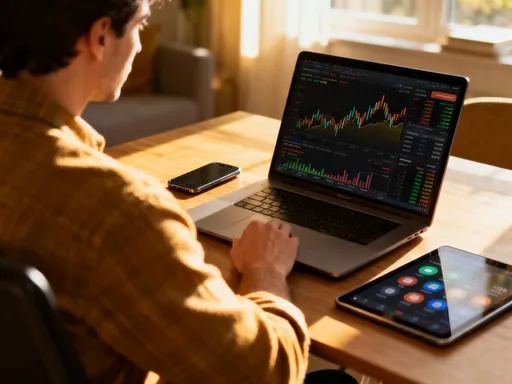
Working from home changed more than my commute — it reshaped how I manage money. Without office routines, I struggled with discipline, overspending, and market noise. But after testing different strategies, I discovered a practical way to build stable returns without chasing risky trends. This isn’t about getting rich quick — it’s about creating financial calm in an unpredictable world. Here’s what actually worked for me.
The Remote Work Money Trap (And Why It Hits Different)
When the shift to remote work first began, many celebrated the freedom — no more rush-hour traffic, no rigid office hours, and the ability to design a personalized workday. But beneath the surface, a quieter financial challenge emerged. The very flexibility that makes remote work appealing also erodes traditional financial discipline. Without the structure of a daily commute or office environment, the boundaries between work, leisure, and spending blur. A quick snack run becomes a full grocery trip charged to a credit card. A midday break turns into an online shopping spree. These small, repeated behaviors add up, creating a cycle of financial drift that’s hard to notice until it’s too late.
This phenomenon isn’t unique, but it’s often overlooked in mainstream financial advice. Most budgeting guides assume a stable paycheck, regular expenses, and a clear separation between professional and personal life — conditions that no longer apply to millions of remote workers. Freelancers, consultants, and digital nomads often face irregular income streams, fluctuating workloads, and the psychological burden of being always 'on.' That constant availability can translate into financial anxiety, which in turn fuels impulsive decisions. For example, after a stressful client call, someone might justify an unplanned purchase as a 'reward.' Over time, these emotional spending patterns chip away at savings and investment momentum.
Another subtle but powerful factor is the isolation that comes with working from home. In an office, casual conversations about budgets, side hustles, or retirement plans can serve as informal financial checkpoints. At home, those touchpoints disappear. Without external feedback, it’s easy to develop blind spots — like underestimating expenses, overestimating income stability, or misjudging risk tolerance. This lack of accountability can lead to poor investment choices, such as chasing trending stocks after seeing them on social media or pulling out of the market during a downturn out of fear. The result is a financial strategy that reacts to emotion rather than aligns with long-term goals.
The remote work money trap isn’t about laziness or lack of willpower. It’s a systemic issue rooted in changed routines, psychological stress, and the absence of built-in financial guardrails. Recognizing this is the first step toward building a more resilient approach. Traditional advice like 'save 20% of your income' or 'invest in the stock market' falls short when income is unpredictable and distractions are constant. What’s needed is a new financial framework — one that accounts for the realities of remote work, prioritizes stability over spectacle, and builds habits that endure even when motivation fades.
Stability Over Hype: Rethinking Investment Priorities
In the age of viral investment trends and 24/7 financial news, it’s easy to equate success with high returns. Headlines celebrate overnight millionaires, meme stocks, and crypto booms, creating the illusion that big wins are both common and achievable. For remote workers, who often have more time to browse financial forums or watch market updates during breaks, this noise can be especially seductive. But chasing high returns comes with a hidden cost — increased volatility, emotional strain, and the risk of significant losses. For those managing their finances outside a traditional 9-to-5 structure, the price of speculation is often too high.
Instead of aiming for explosive growth, a more sustainable approach focuses on return stability. This doesn’t mean settling for low yields or avoiding the market altogether. It means shifting the mindset from speculation to sustainability. The goal is not to outperform the market in a single year, but to achieve consistent, compounding gains over time. Consider this: an investment that returns 6% annually, compounded over 20 years, will more than triple in value. That same investment, if it earns 12% one year but loses 10% the next, may end up with a much lower final balance due to the impact of volatility. Stability, not speed, is what builds lasting wealth.
This principle is especially relevant for remote professionals whose income may already be variable. Adding financial instability on top of income unpredictability creates unnecessary risk. A stable investment strategy acts as a counterbalance — a reliable foundation that doesn’t depend on market timing or emotional decision-making. For example, instead of trying to pick the next big tech stock, a remote worker might choose a low-cost index fund that tracks the entire market. These funds offer broad diversification, low fees, and steady long-term performance. They don’t generate headline-grabbing returns, but they also don’t expose the investor to the risk of a single company’s failure.
Real-life scenarios illustrate the power of this approach. One freelance designer, after years of jumping between hot stocks, switched to a portfolio of dividend-paying funds and global index trackers. Her annual returns were modest — averaging around 5% to 7% — but they were consistent. Over a decade, her portfolio grew steadily, allowing her to cover healthcare costs, fund travel, and eventually purchase a home. She didn’t get rich overnight, but she gained something more valuable: financial confidence. She no longer checked stock prices daily or panicked during market dips. Her strategy worked in the background, quietly compounding while she focused on her work and life.
The shift from hype to stability requires discipline and a willingness to ignore short-term noise. It means resisting the urge to react to every market movement or economic headline. But for remote workers, who already manage distractions in their professional lives, this kind of mental resilience is not only possible — it’s essential. By prioritizing steady returns over speculative gains, they create a financial environment that supports long-term peace of mind.
Building Your Financial Foundation: The First Step
Before any investment strategy can succeed, it must be built on a solid financial foundation. For remote workers, this foundation is not just about having savings — it’s about understanding and managing cash flow in a way that reflects the realities of non-traditional income. Unlike salaried employees who receive a predictable paycheck every two weeks, remote professionals often deal with irregular payments, delayed invoices, or fluctuating project volumes. Without a clear picture of incoming funds, even the best investment plan can fail.
The first step is cash flow tracking tailored to variable income. This means recording every dollar earned and spent, not just monthly, but weekly or even daily. Tools like budgeting apps or simple spreadsheets can help visualize income patterns over time. For example, a freelance writer might notice that earnings peak in the first quarter of the year, dip in summer, and rise again before the holidays. Recognizing these cycles allows for proactive planning — saving more during high-earning months to cover expenses during slower periods. This kind of awareness prevents the common pitfall of overspending after a large payment, only to face a shortfall weeks later.
Equally important is the separation of business and personal expenses. Many remote workers operate as independent contractors or sole proprietors, making it easy for personal costs to blur into business spending — or vice versa. Co-mingling funds can distort financial clarity and complicate tax reporting. The solution is simple: maintain separate bank accounts. One account handles business income and expenses, while another manages personal spending, savings, and investments. Transfers between the two should be intentional and documented, such as a monthly 'salary' withdrawal from the business account. This structure creates accountability and makes it easier to assess true profitability and personal financial health.
Another cornerstone of financial stability is the emergency fund. For remote workers, this isn’t just a safety net — it’s a necessity. Without a steady paycheck, unexpected events like a missed payment, a client cancellation, or a health issue can quickly become financial crises. A well-funded emergency reserve — ideally covering three to six months of essential living expenses — provides breathing room during downturns. The key is to keep this fund in a liquid, low-risk account, such as a high-yield savings account, so it’s accessible when needed but still earns some interest. Automating regular contributions, even if the amounts vary, ensures the fund grows over time without requiring constant attention.
These foundational steps — cash flow tracking, expense separation, and emergency savings — create the stability needed to invest with confidence. They reduce financial stress, prevent reactive decision-making, and provide a clear baseline for setting realistic goals. Without them, any investment strategy, no matter how well-designed, risks being undermined by cash shortages or emotional panic. For remote workers, building this foundation isn’t a one-time task — it’s an ongoing practice that adapts to changing income patterns and life circumstances.
Designing a Low-Maintenance Portfolio That Works While You Work
One of the biggest advantages of remote work is flexibility — the ability to work from anywhere, at any time. But this same flexibility can make traditional investing methods impractical. Most remote professionals don’t have the time or energy to monitor stock prices, read quarterly reports, or adjust portfolios daily. They need an investment strategy that works in the background, generating returns without demanding constant oversight. This is where a low-maintenance portfolio becomes essential.
The core of such a portfolio is diversification across asset classes that generate passive income. Dividend-paying funds, for example, offer regular payouts from companies that share profits with shareholders. These funds tend to be less volatile than growth stocks and provide a steady income stream that can be reinvested or used to cover living expenses. Real estate investment trusts (REITs) are another strong option. They allow investors to gain exposure to property markets without owning physical real estate. REITs are required to distribute at least 90% of their taxable income to shareholders, making them a reliable source of dividends. Global index trackers, which follow broad market benchmarks like the S&P 500 or MSCI World Index, complete the picture by offering instant diversification across hundreds or thousands of companies.
What makes this combination powerful is its simplicity and resilience. Each component serves a purpose: dividend funds provide income, REITs offer inflation protection and sector diversification, and index trackers ensure long-term market participation. Together, they create a balanced portfolio that can withstand market fluctuations without requiring frequent adjustments. For a remote worker managing multiple projects and time zones, this hands-off approach reduces stress and eliminates the temptation to make emotional trades based on short-term movements.
Asset allocation should reflect lifestyle needs, not just age or income. A younger remote worker with stable clients might accept slightly more risk for higher growth potential, while someone nearing retirement may prioritize capital preservation. But regardless of life stage, the emphasis should be on consistency and low maintenance. Rebalancing — adjusting the portfolio back to target allocations — can be done automatically through robo-advisors or scheduled quarterly reviews, rather than constant monitoring. This ensures the portfolio stays aligned with goals without consuming valuable time.
The goal is not to maximize returns in any single year, but to build a system that compounds wealth steadily over time. A low-maintenance portfolio doesn’t promise excitement, but it delivers reliability. It allows remote professionals to focus on their work, their families, and their well-being, knowing their finances are growing quietly and securely in the background.
Automating Discipline: Tools That Keep You on Track
Willpower is a limited resource, especially when juggling work deadlines, family responsibilities, and personal goals. Relying on self-control to save, invest, or stick to a budget is a recipe for inconsistency. The solution is not more motivation — it’s better systems. Automation transforms financial discipline from a daily struggle into a seamless process. For remote workers, who often face unpredictable schedules and decision fatigue, automated tools are not just helpful — they’re essential.
One of the most effective tools is automatic savings. Many banks and financial apps allow users to set up rules that move money from checking to savings or investment accounts on payday. For example, a remote worker can configure a rule that transfers 10% of each incoming payment to a dedicated investment account. This ensures that saving happens before spending, reducing the temptation to use the money elsewhere. Over time, these small, consistent transfers accumulate into significant wealth. The key is to make the process invisible — once set up, it requires no further action.
Robo-advisors take automation a step further by managing investments with minimal human input. These digital platforms use algorithms to build and rebalance diversified portfolios based on risk tolerance and goals. They automatically reinvest dividends, adjust allocations as markets change, and even optimize for tax efficiency. For someone without a finance background, a robo-advisor provides professional-level management at a fraction of the cost of a human advisor. More importantly, it removes emotional bias from investing. There’s no panic selling during a market dip or impulsive buying during a rally — just a steady, rules-based approach that follows the long-term plan.
Budgeting apps also play a crucial role. They track spending in real time, categorize expenses, and send alerts when limits are approached. Some can even predict future cash flow based on past patterns, helping remote workers anticipate lean months and adjust accordingly. Setting up quarterly check-in reminders ensures regular financial reviews without the burden of daily monitoring. These tools don’t eliminate financial decisions — they make them easier, more informed, and less emotionally charged.
Automation doesn’t guarantee success, but it dramatically increases the odds. It turns good intentions into consistent actions, even on the busiest or most stressful days. For remote workers, who must navigate financial uncertainty without the structure of a traditional job, these systems provide the stability and peace of mind needed to thrive.
Avoiding the Isolation Trap: Staying Financially Accountable
Working remotely offers freedom, but it also brings a hidden challenge: isolation. Without colleagues to share goals with, celebrate wins, or offer reality checks, it’s easy to lose perspective. Financial decisions can become insular, shaped more by emotion than by sound reasoning. A market gain might feel like validation, leading to overconfidence and riskier bets. A downturn might trigger fear, prompting a hasty exit from investments. Without external feedback, these biases go unchecked, undermining long-term stability.
The solution is to build intentional accountability. This doesn’t require a formal financial advisor — though one can help — but rather a network of trusted peers or mentors who understand the remote work lifestyle. Virtual mastermind groups, online communities, or regular check-ins with a financially savvy friend can serve as valuable sounding boards. These relationships provide more than just advice; they offer perspective, encouragement, and gentle correction when needed.
For example, a remote developer joined an online financial group for digital nomads. Every month, members shared their progress, challenges, and goals. When he considered pulling his investments during a market correction, he posted his concerns. The group reminded him of his long-term strategy and shared their own experiences with volatility. That external input helped him stay the course — and ultimately benefit from the market’s recovery. Similarly, a freelance marketer used quarterly calls with a retired accountant relative to review her budget and portfolio. These conversations kept her disciplined and aligned with her goals, even during busy seasons.
Accountability also helps identify blind spots. Remote workers may overestimate their income stability, underestimate expenses, or misjudge risk tolerance because they lack comparative data. Hearing how others manage similar challenges provides valuable context. It’s easier to stick to a budget when you know others are doing the same. It’s easier to resist a risky investment when a peer points out the potential downsides. These interactions foster a sense of shared purpose and reduce the emotional weight of financial decisions.
Staying accountable doesn’t mean outsourcing responsibility — it means enhancing it with support. In a world where financial information is abundant but wisdom is scarce, having a trusted circle offers clarity and confidence. For remote workers, who already navigate professional isolation, building this financial community is a powerful step toward lasting success.
Putting It All Together: A Realistic Path to Calm, Consistent Growth
Financial success for remote workers isn’t about complex strategies or extraordinary discipline. It’s about consistency, simplicity, and adaptability. The most effective approach combines a solid foundation, a low-maintenance portfolio, automated systems, and external accountability into a cohesive routine that evolves with life’s changes. This isn’t a rigid plan — it’s a flexible framework designed to support long-term growth without overwhelming daily life.
A realistic monthly routine might start with a cash flow review. On the first day of each month, the remote worker checks incoming payments, tracks recent expenses, and adjusts the budget if needed. This takes less than an hour but provides clarity and control. Next, the portfolio is reviewed — not to make trades, but to ensure allocations remain balanced and fees are in check. If rebalancing is needed, it’s done automatically or scheduled for the next quarter. Savings and emergency fund contributions are verified, with adjustments made based on income fluctuations.
Every three months, a more detailed check-in occurs. This includes reviewing investment performance against benchmarks, assessing progress toward long-term goals, and updating tax estimates. It’s also a time to connect with the accountability network — whether through a mastermind call, a mentor meeting, or a community forum. These regular touchpoints prevent drift and reinforce commitment.
The beauty of this approach is its sustainability. It doesn’t require financial expertise, perfect discipline, or constant attention. It works for someone earning $3,000 a month or $10,000, for those working from a home office or a beachside villa. It’s not about achieving perfection — it’s about making steady progress. Market downturns don’t derail it. Busy seasons don’t break it. Life changes don’t invalidate it.
In the end, steady returns come not from genius moves, but from practical habits repeated over time. They come from paying attention to cash flow, choosing stability over hype, automating discipline, and staying connected. For remote workers, this isn’t just a financial strategy — it’s a path to greater freedom, confidence, and peace of mind. And that, more than any return percentage, is the real measure of success.